
















In Tokyo, on July 26, 2025, a macaque was born into unfavorable odds. His name is Punch (or Panchi-kun in Japanese), and his mother abandoned him just days after his birth.
What could have been a quiet footnote in this Tokyo zoo’s daily routine instead became a global moment. Zookeepers and caregivers at Ichikawa City Zoo and Botanical Garden immediately stepped in, monitoring and caring for Punch during his first fragile weeks. Physically, Punch was fine. Yet, emotionally, something was clearly missing.
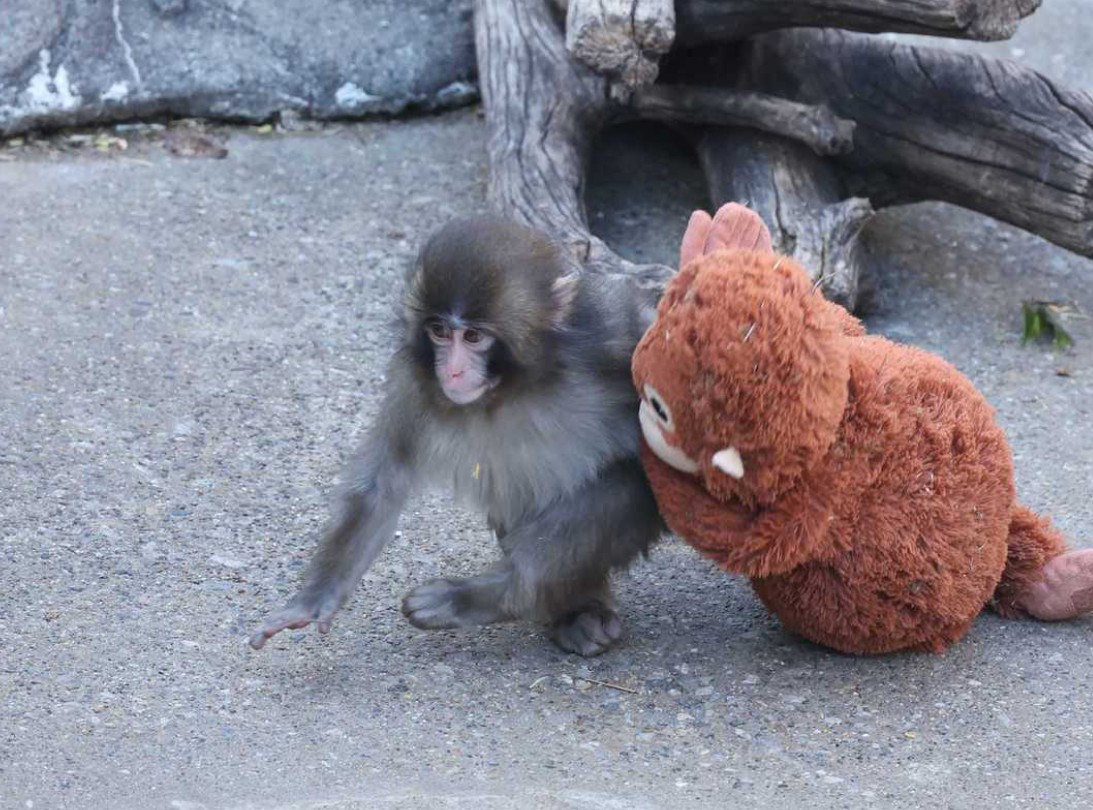
To comfort this tiny monkey, the zoo introduced stuffed animals into the enclosure. Punch gravitated toward one in particular, an IKEA orangutan plush, and they soon took over the internet.
That image–a baby macaque clutching on to a stuffed animal for comfort–was all it took. Photos and short clips began circulating across social media platforms, and soon, Punch was not any regular zoo animal. He was the internet’s underdog.
When asked about how she felt when she initially heard Punch’s story, Junior Cybil Huxford said, “I felt really sorry for him, because he was so small. When I saw him run up to that small orangutan, my heart went out to him.”
Punch’s story compelled the world. He’s small. Hesitant. Vulnerable. In videos, he can be seen attempting to approach other macaques, only to be pushed away or chased off. Each time, he retreats back to the safety of his orangutan companion.
Upon seeing Punch get hit by other monkeys, Teacher Ms. Gisi expressed, “it made me sad seeing Punch being bullied by other monkeys. I thought the other monkeys were losers and Punch handled it like a champ. He seems like a tough monkey.”
When looking at Punch’s story, it is hard not to see a reflection of the universal fear of rejection — the awkward attempt to fit in, the sting of exclusion, the search for something familiar when the world feels hostile. No wonder he blew up the way he did.
The internet responded the only way it knows how: loudly and emotionally. Comment sections filled with supportive messages. Videos of Punch and the orangutan crowded For You Pages. Thousands joked about flying to Japan and “defending” him. Beneath the humor, though, was something sincere. All around the world, people cared.
Recent updates from the zoo suggest that Punch’s story is shifting for the better. Videos now show an adult female macaque grooming him — a powerful sign of acceptance in primate social life. Additionally, Punch has been seen interacting more confidently with the other Tokyo macaques, playing and living among them with ease.
This happy turn has brought relief to the thousands who have been following his journey. Yet, it can’t help but be wondered if perhaps the real reason Punch captured the internet’s attention goes deeper than cuteness or drama. In a world where many people, despite where they are, feel isolated or disregarded, Punch, a monkey in Tokyo, became a symbol of perseverance. He kept approaching the troop.
And eventually, he was met with care.
When asked about Punch, Senior Sakura Mumm says, “no matter what the world throws at Punch, he will prevail. For him trying his best–that’s more than what most can do.”
Punch may just be a baby monkey in a zoo enclosure in Japan, but his story resonates because it mirrors something deeply human: the desire to belong. His mother walked away. The world logged on. And in the end, Punch found what he needed most, not viral fame, but connection.