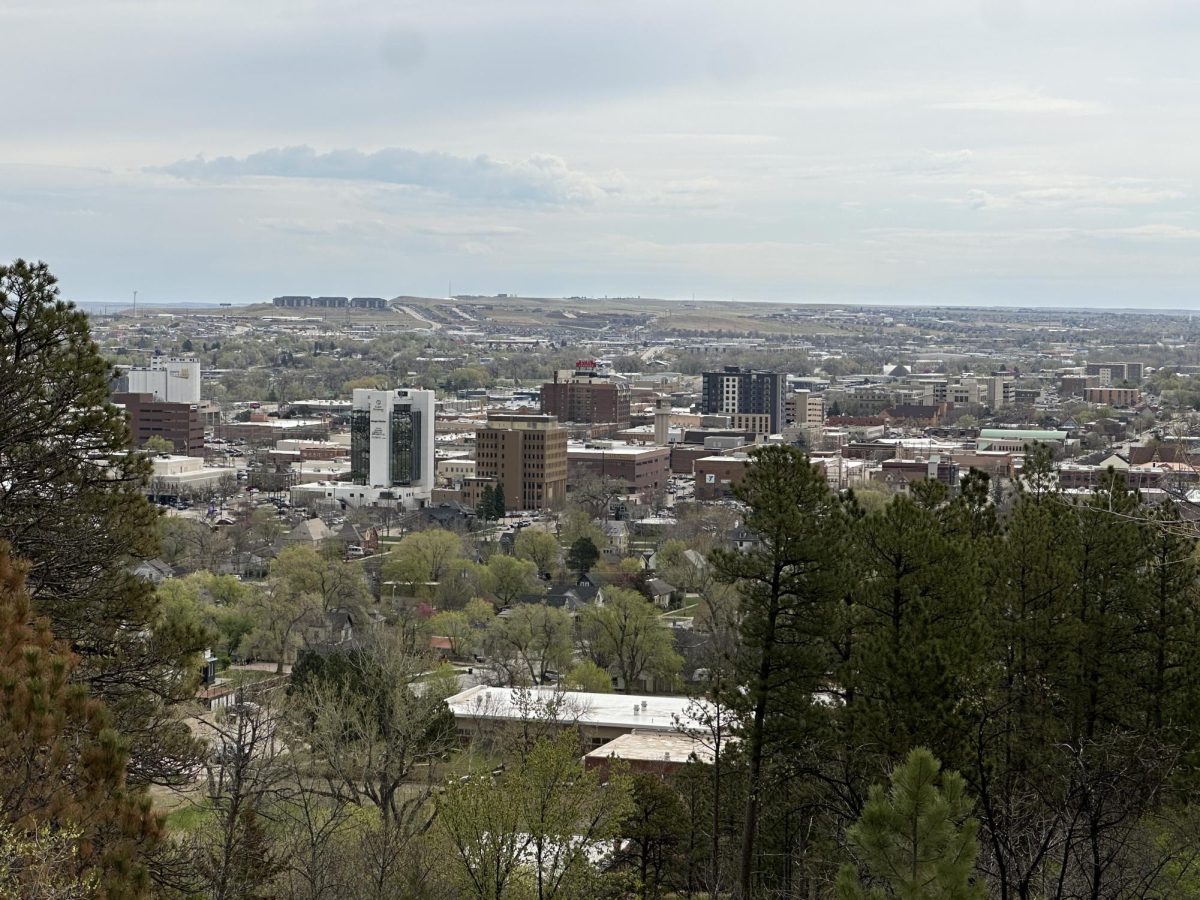


















Rapid City is increasingly seeing more of artificial intelligence, not just with online aspects but with developments that could support the growing industry. Its ability to improve efficiency and do various kinds of tasks make it a practical tool for small or large businesses.
An example of the increase of AI locally is with a potential data center. According to a report from Data Center Dynamics by Dan Swinhoe, the company Sequitor Edge is planning to build a 30,000 square foot data center on 10 acres located next to Highway 16 near the landfill.
In an interview with Rapid City Council member, Stephen Tamang, he states, “Data centers are increasingly important because they support cloud computing, data storage, networking, and artificial intelligence applications.”
According to information provided by an FAQ document at Elevate Rapid City, this data center would run as a Tier 3 edge computing model, which is smaller and focuses on being local rather than extremely large global cloud developments. There are already 4 edge computing centers in South Dakota, and this one would be targeted for western South Dakota.
There are some local concerns with this data center regarding electricity and environmental impacts.
The facility is projected to use approximately 2 megawatts (MW) in the first stage and 10 MW in its full build-out capacity.
The topic of water has been discussed with this project as well. According to the FAQ document from Elevate Rapid City, “The project requires approximately 19,000 gallons of water to initially fill its closed-loop cooling system.” This means that the water will be recirculated through the building and will not need to repeat the 19,000 gallon process. If local water service was approved, Stephen Tamang says, “it would presumably come from Rapid City’s municipal water system, which is ultimately tied in significant part to local regional water resources, including Pactola Reservoir.”
During the interview, Tamang also explains that projects like these should still be looked at carefully to ensure citizens aren’t affected negatively.
“In my view, any proposal in Rapid City should be evaluated carefully to ensure that residents do not experience degraded service or increased costs simply to accommodate a private facility,” Tamang states.
Before the data center is approved, Tamang mentioned that other aspects like noise, infrastructure strain, and land use compatibility should be considered.
The facility is going to be located in the Black Hills Industrial Park, and Tamang explained, “As things currently stand, data centers are generally allowed in industrial zoning districts.” In a brief interview with Drew Staufer of Elevate Rapid City, he says that the land is zoned heavy industrial and has been for a few years. This makes the approval process slightly easier as the zoning laws are already in place and do not have to be changed.
The design for the data center also incorporates sound mitigation measures, according to the Elevate Rapid City FAQ document.
While concerns are raised about noise, infrastructure, and the environment, the data center has the potential to create economic growth in Rapid City. “There could be some economic benefits, particularly during construction, along with possible sales tax revenue related to energy use and building activity. More broadly, data centers are part of the infrastructure that powers the modern economy,” says Tamang. While it can provide benefits he also mentions that these data centers do not create many permanent jobs.
Although many large corporations have interest in AI, the technology is appearing in Rapid City in smaller ways. It has the ability to provide tools such as content creation, customer service, and data analysis.
Even young entrepreneurs have been showing interest in artificial intelligence. A Rapid City teenager, John Freidel, has started a company called Rapid Stop that consists of AI-operated vending machines.
For the small business owner Dean Albenze, whose company is marketed to businesses nationwide, artificial intelligence is more a beneficial tool than something to replace employees with.
Dean Albenze owns two offline artificial intelligence platforms, Albenze and Guaardvark, which help businesses create content and protect and process their data. His platforms are not like most because they run offline, which is beneficial for keeping company data secure.
His interest in AI started as a personal project.
“So I got involved with this and I started to build something more like a tool for me,” Albenze said. “But then I realized just how powerful it is, then realized others need to see it.”
Many people have concerns about AI replacing jobs, but Albenze believes it is how businesses choose to use it. He explains if employees aren’t consistently pushing themselves and are taking the easier route with the technology instead, job loss could then become an issue.
As more businesses begin to use artificial intelligence, it is important to understand how to use it productively. Albenze believes small businesses should use AI as a tool and with an open mind.
“Embrace it, learn it, use it, and don’t be afraid of it, because whether we like it or not, it’s not going anywhere,” Albenze said.
Artificial intelligence is becoming more prominent across the country and more cities are getting involved with it. The Sequitor Edge data center project shows Rapid City is gaining a larger AI presence.